
Assistive AI & operational memory
Quiet, staff-controlled tools for handoffs, case memory, and less admin, with humans always in control.
Other topics
- Buying & evaluating software
- Case management & operations
- Phones, answering & after-hours calls
- Documents, e-signatures & forms
- Payments, collections & accounting
- Preneed & cremation operations
- Records, security & compliance
- State rules, licensing & filing
- Marketing, SEO & growth
- Funeral home business & strategy
- Paper, spreadsheets & your first system
- Sales, leads & growing your firm
11 articles in this topic.
All topics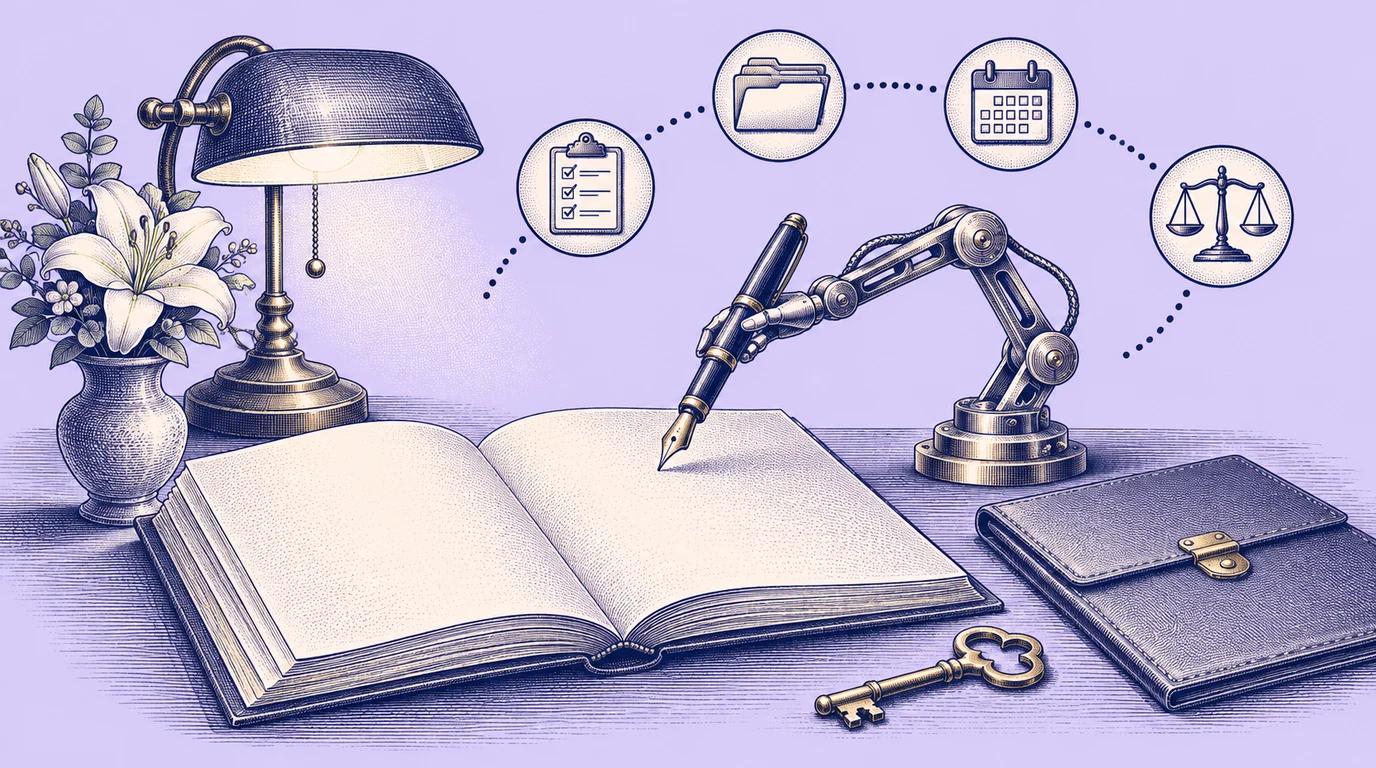 GuideAI Agents in the Funeral Industry: Uses, Limits, and Buying QuestionsAn AI agent can use connected tools as well as generate an answer. For a funeral home, the buying question is what it can access, what it can change and when a person must approve the next step.FuneralHQ Editorial Team8 min read
 Assistive AIAI for After-Hours Funeral Home Work: What Can Be Assisted and What Needs a HumanFuneral homes never close, and the 3 AM call is the hardest part of the job. A person is the right answer to it. When no person can pick up, an assistant is a better answer than voicemail, provided it wakes a director and knows its limits.FuneralHQ Editorial Team6 min read
 Assistive AIAI in the Funeral Industry: Uses, Examples, and What to CheckAI in the funeral industry includes phone answering, obituary drafts, case notes, search and service ideas. Compare current examples, review responsibilities and the difference between AI, agents and ordinary automation.FuneralHQ Editorial Team10 min read
 Assistive AIAI Obituary Writers: Where They Help and Where Human Review Is Non-NegotiableAI obituary tools are everywhere in funeral software now. They can genuinely help with a first draft. But an obituary is a permanent public record of someone’s life, so the line on human review is not a nicety. It is non-negotiable.FuneralHQ Editorial Team6 min read
 Assistive AICase Memory: How Funeral Homes Can Remember Returning FamiliesA family comes back years later, through an in-law, a friend, or a prior service, and the director does not want to say "I have no idea who you are." Case Memory is about surfacing that context fast, so you greet a returning family like the relationship you earned.FuneralHQ Editorial Team6 min read
 WorkflowFuneral Directors Are Event Planners: Software for the Service-Day HandoffA funeral is an event. It has a timeline, staff assignments, routes, merchandise, clergy, music, livestreaming, documents, payments, and a family with expectations. Treating the case as a service event, not just a file, changes how you run the day.FuneralHQ Editorial Team6 min read
 Assistive AIFuneral Home Document Autofill: Map Forms Once, Stop RetypingA practical question every buyer should ask: does the software know where the first name and date of birth go on a form, or does someone map every field? The honest answer is that good autofill is a one-time setup, reviewed by staff, then reused.FuneralHQ Editorial Team6 min read
 WorkflowFuneral Home Handoffs: How to Keep Details From Getting LostThe single biggest breakdown in a funeral home is the handoff. So much of a case lives in one director’s head: family dynamics, what was promised, who needs careful handling. Getting that out of memory and onto the case is the whole game.FuneralHQ Editorial Team7 min read
 Assistive AIPlain-English Search for Funeral Homes: Ask About a Case Without Clicking Through TabsA surprising amount of a funeral director’s day is click, click, click to answer a simple question. Plain-English search lets your team just ask, across your firm’s own records, and get the answer without digging.FuneralHQ Editorial Team5 min read
 Assistive AIFrom Pocket Notebook to Case Record: A Practical Guide for Funeral DirectorsPlenty of excellent directors run on paper and a pocket notebook, and software that demands they stop will simply lose. The better approach is to keep your working style and make the important parts retrievable for the rest of the team.FuneralHQ Editorial Team6 min read
 Assistive AIWhat AI Should Never Do in a Funeral HomeThe fastest way to build trust around AI in a funeral home is to be clear about what you will never automate. Drawing that line in public is not a limitation. It is the whole point.FuneralHQ Editorial Team6 min read
These guides cover where AI helps in a funeral home and where it must not be used. They explain tools that draft, search, and summarize for staff, the limits that keep a person in charge of every decision that reaches a family, and what to ask a vendor about how its AI works.
FuneralHQ marks which of its own assistive tools are available and which are in development, and these guides keep to that line.
GuideAI Agents in the Funeral Industry: Uses, Limits, and Buying QuestionsAn AI agent can use connected tools as well as generate an answer. For a funeral home, the buying question is what it can access, what it can change and when a person must approve the next step.FuneralHQ Editorial Team8 min readAssistive AIAI for After-Hours Funeral Home Work: What Can Be Assisted and What Needs a HumanFuneral homes never close, and the 3 AM call is the hardest part of the job. A person is the right answer to it. When no person can pick up, an assistant is a better answer than voicemail, provided it wakes a director and knows its limits.FuneralHQ Editorial Team6 min readAssistive AIAI in the Funeral Industry: Uses, Examples, and What to CheckAI in the funeral industry includes phone answering, obituary drafts, case notes, search and service ideas. Compare current examples, review responsibilities and the difference between AI, agents and ordinary automation.FuneralHQ Editorial Team10 min readAssistive AIAI Obituary Writers: Where They Help and Where Human Review Is Non-NegotiableAI obituary tools are everywhere in funeral software now. They can genuinely help with a first draft. But an obituary is a permanent public record of someone’s life, so the line on human review is not a nicety. It is non-negotiable.FuneralHQ Editorial Team6 min readAssistive AICase Memory: How Funeral Homes Can Remember Returning FamiliesA family comes back years later, through an in-law, a friend, or a prior service, and the director does not want to say "I have no idea who you are." Case Memory is about surfacing that context fast, so you greet a returning family like the relationship you earned.FuneralHQ Editorial Team6 min readWorkflowFuneral Directors Are Event Planners: Software for the Service-Day HandoffA funeral is an event. It has a timeline, staff assignments, routes, merchandise, clergy, music, livestreaming, documents, payments, and a family with expectations. Treating the case as a service event, not just a file, changes how you run the day.FuneralHQ Editorial Team6 min readAssistive AIFuneral Home Document Autofill: Map Forms Once, Stop RetypingA practical question every buyer should ask: does the software know where the first name and date of birth go on a form, or does someone map every field? The honest answer is that good autofill is a one-time setup, reviewed by staff, then reused.FuneralHQ Editorial Team6 min readWorkflowFuneral Home Handoffs: How to Keep Details From Getting LostThe single biggest breakdown in a funeral home is the handoff. So much of a case lives in one director’s head: family dynamics, what was promised, who needs careful handling. Getting that out of memory and onto the case is the whole game.FuneralHQ Editorial Team7 min readAssistive AIPlain-English Search for Funeral Homes: Ask About a Case Without Clicking Through TabsA surprising amount of a funeral director’s day is click, click, click to answer a simple question. Plain-English search lets your team just ask, across your firm’s own records, and get the answer without digging.FuneralHQ Editorial Team5 min readAssistive AIFrom Pocket Notebook to Case Record: A Practical Guide for Funeral DirectorsPlenty of excellent directors run on paper and a pocket notebook, and software that demands they stop will simply lose. The better approach is to keep your working style and make the important parts retrievable for the rest of the team.FuneralHQ Editorial Team6 min readAssistive AIWhat AI Should Never Do in a Funeral HomeThe fastest way to build trust around AI in a funeral home is to be clear about what you will never automate. Drawing that line in public is not a limitation. It is the whole point.FuneralHQ Editorial Team6 min readSee how this works in software
Book a 20-minute walkthrough on a sample case and see how FuneralHQ handles the workflows in these guides.